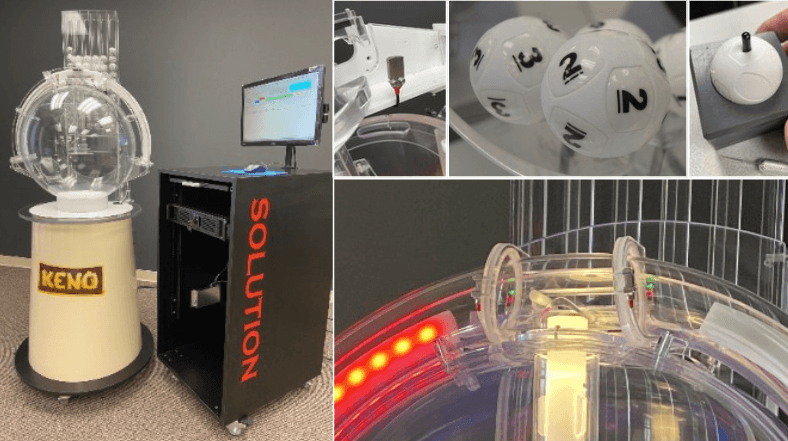
At Smartplay International, we design and manufacture lottery equipment and custom gaming devices for operators around the world. Our traditional lottery machines are considered inherently random — the turbulence and air mixing within their chambers ensure statistically unbiased outcomes that align with widely recognized randomness standards.
But in today's rapidly evolving gaming environment — especially with the explosive growth of live game studios — many clients are no longer relying solely on traditional draws. They're creating unique physical games: plinko-style boards, oversized prize wheels, toss boards, and hybrid products that combine physical movement with digital scoring. These live games, often streamed to players in real time, present a certification challenge that every operator needs to understand before going to market.
Why Randomness Certification Matters in Live Games
Randomness certification ensures three essential outcomes: compliance, fairness, and credibility. For regulators, it confirms that game outcomes are unpredictable and independent. For players, certification builds the trust that keeps them engaged. For operators, it unlocks regulated markets and makes products more attractive to business partners.
In live games specifically, certification is even more critical. These products are broadcast in real time. If a player suspects bias in a wheel spin or how balls fall through a plinko board, trust is immediately and permanently eroded. Independent certification by a lab such as GLI or BMM Testlabs provides the assurance players and regulators need.
What Certification Bodies Look For
Independent auditing labs evaluate games based on three core principles:
- Unpredictability — players should not be able to predict or influence outcomes beyond what is inherent to the design
- Uniform distribution — each outcome must occur with the probability expected from the rules or physics of the game
- Independence — each play must be independent from the last, with no carryover effects influencing subsequent results
The Certification Challenge of Physical Games
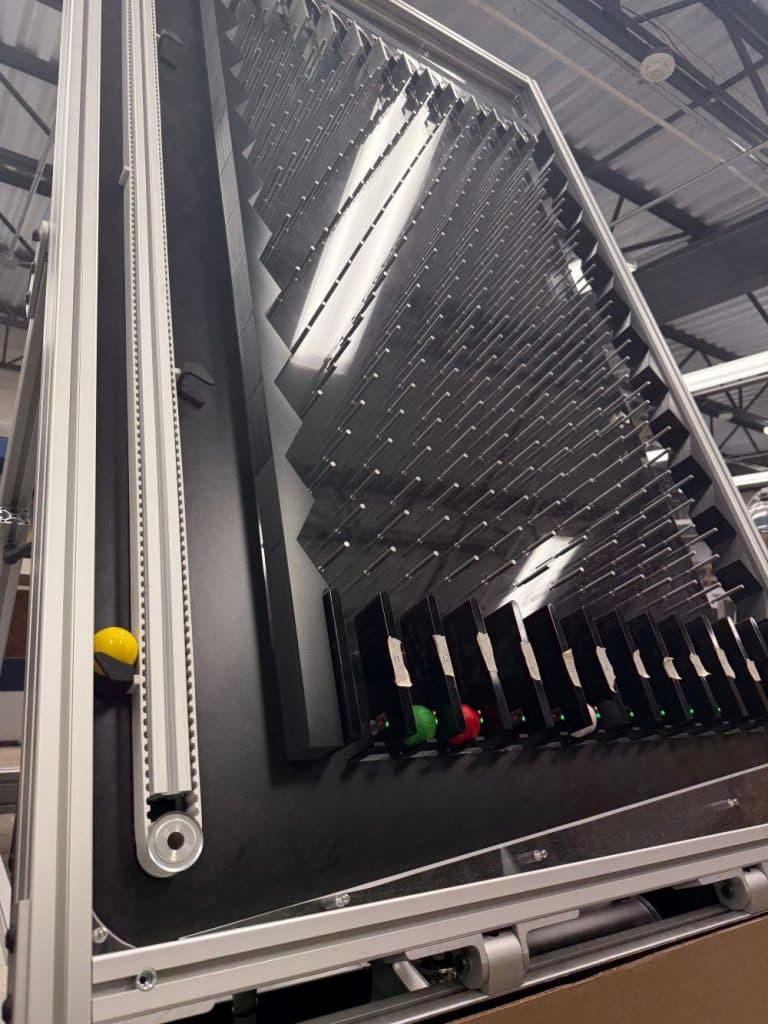
Take plinko as an example. When a ball drops from the top of a plinko board, it bounces through pins until it lands in one of several scoring pockets. This seems random, but in practice, the board's geometry creates a distribution where most balls land in the center — a natural bell curve. Certification bodies know this. Their job isn't to make every pocket equally likely, but to confirm that observed results match the mathematically expected distribution for that design.
When outcomes are tied to prizes or wagering, however, this distribution becomes a regulatory problem. If outside pockets pay higher rewards but are significantly less likely to be hit, regulators will require adjustments. The solution: a certified electronic RNG that overlays the physical play.
Adding RNG Elements for Certification
An RNG allows developers to separate the visual entertainment of the physical game from the fairness of the scoring. In a plinko board, for example, the physical ball drop determines the path — but the pocket values at the bottom are randomized electronically by the RNG before each play. This means that even though the ball lands most often in the middle, every pocket has an equal chance of awarding the top prize because the scoring assignment is driven by a certified RNG.
Similarly, in a prize wheel game, while the spin provides a physical outcome, the payout or multiplier associated with each segment can be randomized electronically. This hybrid approach ensures fairness without sacrificing entertainment. Certification bodies test the RNG separately with rigorous statistical analysis, then verify the full system integration.
What Full Live Game Certification Looks Like
- Physical testing — thousands of simulated plays measuring outcome distribution on the physical device, compared against theoretical expectations
- Electronic RNG testing — rigorous statistical analysis including tests from the NIST suite to validate randomness, uniform distribution, and absence of patterns
- System integration testing — confirming that physical and electronic components interact properly and that outcomes are truly independent
- Hardware and software review — full audit of equipment, source code, log integrity, and tamper-evidence post-certification
How Live Game Studios Can Prepare
The key to certification success is to plan for it during the design phase — not after prototyping is complete. Studios that design with certification in mind avoid costly redesigns and reach regulated markets faster.
- Define randomness early: decide whether it will be purely physical, electronic, or hybrid
- Prototype and stress-test: drop thousands of balls, spin the wheel hundreds of times, simulate plays digitally to detect bias before a lab does
- Integrate certified RNGs to level out prize distributions where physics alone can't provide fairness
- Standardize player input: consider automated release mechanisms to reduce the influence of skill in chance-based games
- Engage certification labs during design: many labs offer pre-certification reviews that save time and money
The Future of Live Game Certification
As live games continue to grow in popularity across online casinos and streaming environments, regulatory scrutiny will only intensify. These games combine the visual appeal of physical play with the reliability of electronic systems — making them among the most innovative products in gaming. But the more unique the game, the more essential certification becomes.
At Smartplay, we work with operators and live game studios to bring new concepts to market quickly while ensuring they meet regulatory requirements. From custom draw machine fabrication to RNG integration and certification support, we provide the engineering expertise you need to deliver compliant, engaging experiences that players and regulators trust. Contact our team to learn more about our custom design and fabrication services.